Walking Together: How Our Dundee Community Strolls Are Changing Lives
Our free weekly walking groups have grown from a handful of regulars to one of Dundee's most-loved health initiatives — and the benefits go far beyond fitness.
When Vibrant Health Advocates launched its community walking programme in Dundee three years ago, the ambition was modest: get a few people moving, build some routine, maybe chip away at the isolation that so often accompanies poor health. Nobody quite anticipated what it would become. Today, more than eighty participants turn out across our four weekly routes — from the riverside path along the Tay to the quieter green corridors of Lochee Park — and the waiting list for places speaks to a hunger in this city for connection as much as exercise.
The science behind walking as a health intervention is remarkably robust. Regular brisk walking reduces the risk of cardiovascular disease, type 2 diabetes, and certain cancers. It supports mental health by lowering cortisol levels and releasing endorphins. For people managing long-term conditions — and in Dundee, rates of heart disease and diabetes remain among the highest in Scotland — the cumulative effect of thirty minutes of moderate movement several times a week is genuinely transformative. Our programme is designed with that evidence at its core, but delivered with the warmth and flexibility that clinical settings rarely manage.
Every walk is led by a trained volunteer walk leader and accompanied by at least one member of our health advocacy team. Routes are graded by pace and distance, so a participant recovering from a cardiac event walks alongside someone simply wanting to shift their lifestyle, both moving at a pace that suits them. Nobody is left at the back. Nobody is made to feel slow. That ethos of radical inclusion is, according to our participants, precisely what keeps them coming back.
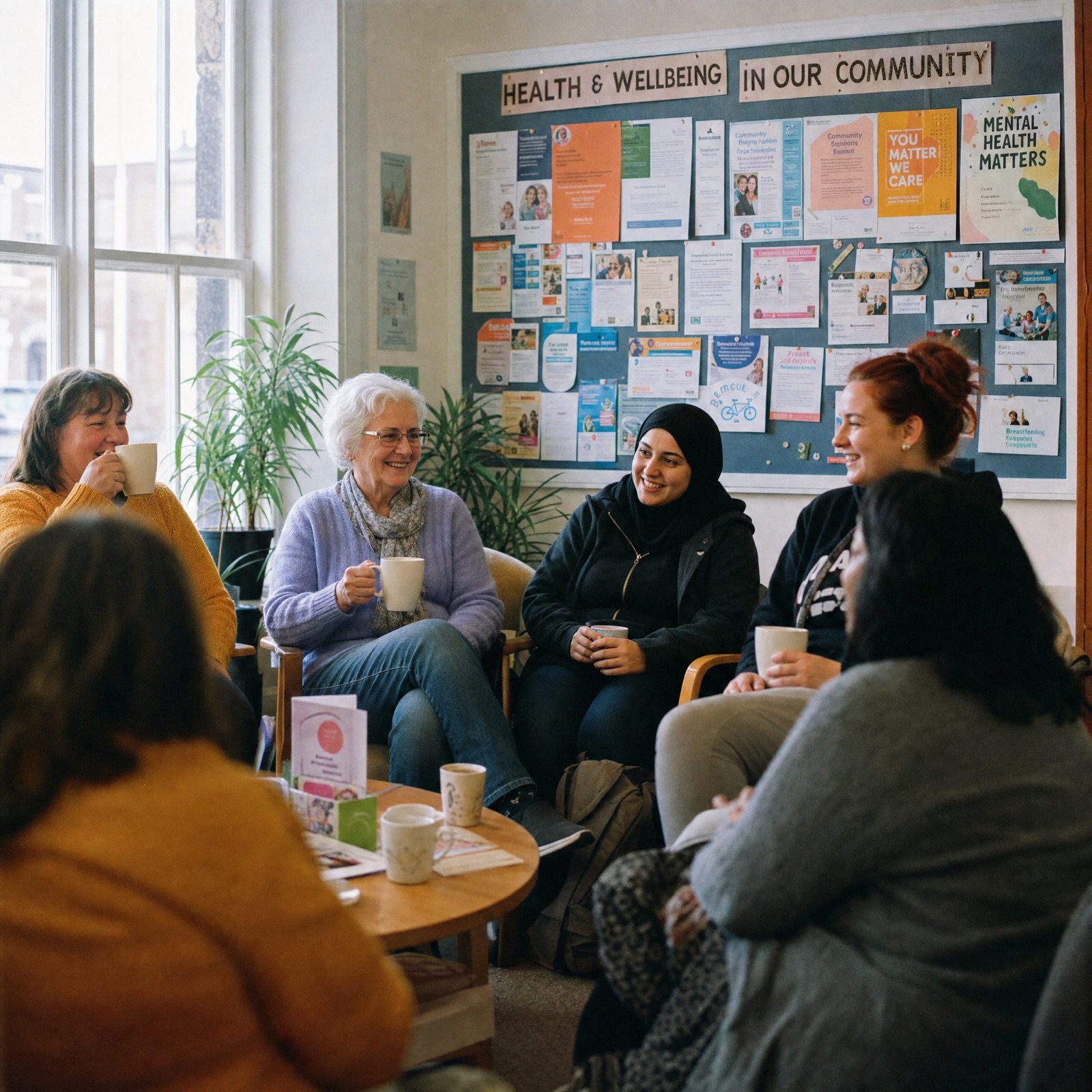
The social dimension of the programme is impossible to overstate. Loneliness is a public health crisis in its own right, and Dundee's communities — particularly in areas like Lochee, Coldside, and Menzieshill — have borne significant economic pressure over recent decades. Many of our walkers tell us that the conversation during a Tuesday morning route is the highlight of their week. Friendships formed on these paths have led to shared meals, mutual support during illness, and informal networks of care that extend well beyond anything our small staff team could provide alone.
We have also worked hard to make the programme genuinely accessible. Participants who cannot afford appropriate footwear can borrow from our equipment library. Those with mobility aids are welcome on our accessible routes, which are specifically scouted for smooth surfaces and rest points. Interpretation is available in Polish and Arabic to serve Dundee's growing communities. Health information leaflets distributed at the end of each walk cover topics requested by participants themselves — blood pressure monitoring, sleep hygiene, managing stress — so the learning continues long after the route is done.
Looking ahead, we are working with Dundee City Council's Active Travel team to open two new routes in the north of the city, where provision has historically been thinnest. We are also piloting a 'Buddy Walk' model for people who are not yet ready to join a group, pairing them with a trained volunteer for one-to-one sessions until they feel confident enough to walk with others. If you would like to join a group, volunteer as a walk leader, or simply find out more, get in touch with the Dundee branch team — all the details are on this website. The path is open to everyone.